
Master Unlock All Solutions
Enter the teacher/security password to unlock all Exercise 1 & 2 worked solutions and model answers across the entire simulation.
Incorrect Password! Try again.
History of Calculus & Derivatives
Mathematicians developed the concept of derivatives to solve two old problems: the first one is drawing the tangent to the curve, and the second one is calculating the velocity of non-uniform motion of particles.
The modern development of calculus is usually credited to Isaac Newton (1642–1727) and Gottfried Wilhelm Leibniz (1646–1716), who provided independent and unified approaches to differentiation and derivatives.
Before 1900, it was thought that calculus is quite difficult to teach. So calculus became beyond the reach of youngers. But just in 1900, John Perry and others in England started propagating the view that essential ideas and methods of calculus were simple and could be taught even in schools. F. L. Griffin pioneered the teaching of calculus to first year students. This was regarded as one of the most daring acts in those days.
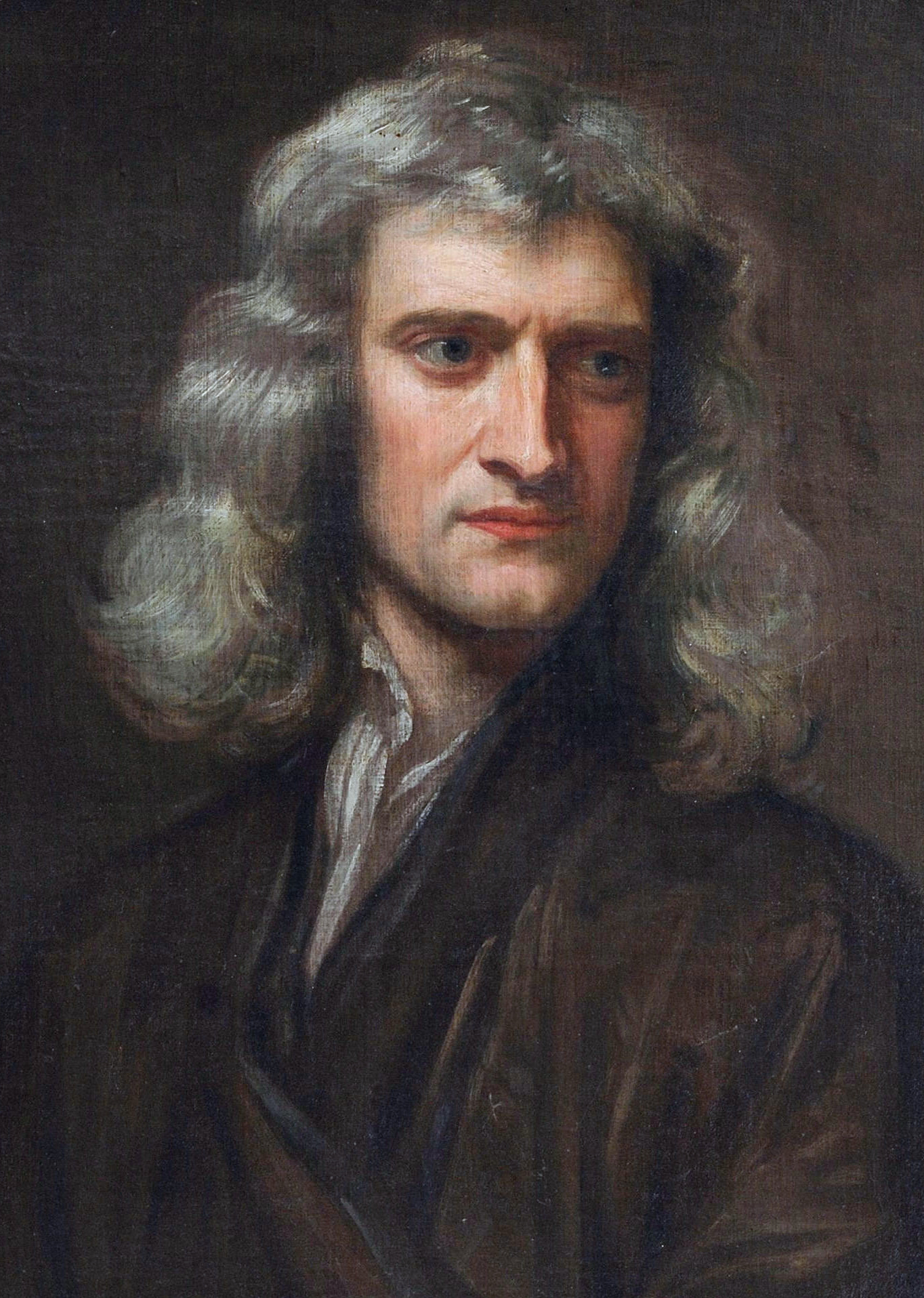 Sir Isaac Newton (1642–1727)
Real Life Examples & Conceptual Memes
Differentiation vs Integration
"Maths is Easy!"
Order of Differentiation
Instantaneous Rate of Reduction!
A car moves along a straight road. Its position at any time $t$ (in seconds) is given by:
1. Velocity is the derivative of position:
• At $t = 2\text{ s}$: $v(2) = 3(2)^2 - 12(2) + 9 = -3\text{ m/s}$ (Car moving backward)
• At $t = 4\text{ s}$: $v(4) = 3(4)^2 - 12(4) + 9 = 9\text{ m/s}$ (Car moving forward)
Interactive Velocity Canvas
Geometrical Visualization: Secant $\to$ Tangent
Interactive Curve $y = f(x)$
Geometrical Meaning: Let $A(x, y)$ be any point on continuous curve $y = f(x)$ and $B(x+\Delta x, y+\Delta y)$ be another point on the curve near to point $A$. As $B \to A$, the secant line $AB$ tends to approach the tangent line $AT$ at point $A$.
Physical Meaning: Instantaneous velocity of a rolling stone or moving particle: $v = \lim_{\Delta t \to 0} \frac{\Delta s}{\Delta t} = \frac{ds}{dt}$.
18.1 Derivatives & Definitions
1. Increments
Let $y = f(x)$ be a function of $x$. Let $\Delta x$ be an increment (small change) in the value of $x$ and $\Delta y$ be the corresponding increment in the value of $y$. So that:
This gives the incremental ratio (instantaneous rate of change of $y$ with respect to $x$):
2. Derivative / First Principles
Let $y = f(x)$ be a continuous function defined on an interval $[a, b]$. The derivative or differential coefficient of $f(x)$ at $x$ is defined as the limiting value:
3. Derivability at a Point
A function $f(x)$ is differentiable at $x = a$ if and only if Right-Hand Derivative (RHD) and Left-Hand Derivative (LHD) exist finitely and are equal:
All Worked Examples & First Principle Derivations
Example 1: Find derivative of $y = \frac{3}{2x-2}$ from definition
Let $y = f(x) = \frac{3}{2x-2}$. Then $f(x+h) = \frac{3}{2(x+h)-2}$.
$$f'(x) = \lim_{h \to 0} \frac{f(x+h)-f(x)}{h} = \lim_{h \to 0} \frac{\frac{3}{2x+2h-2} - \frac{3}{2x-2}}{h} = \lim_{h \to 0} \frac{-6h}{h(2x+2h-2)(2x-2)} = -\frac{6}{(2x-2)^2}$$
Example 2: Find derivative of $y = x - \frac{1}{x}$ from first principle
$$\Delta y = (x + \Delta x - \frac{1}{x+\Delta x}) - (x - \frac{1}{x}) = \Delta x + \frac{\Delta x}{x(x+\Delta x)}$$
$$\frac{dy}{dx} = \lim_{\Delta x \to 0} \left(1 + \frac{1}{x(x+\Delta x)}\right) = 1 + \frac{1}{x^2}$$
Example 3: Find derivative of $y = \frac{1}{\sqrt{x}}$ from first principle
$$\frac{dy}{dx} = \lim_{h \to 0} \frac{\frac{1}{\sqrt{x+h}} - \frac{1}{\sqrt{x}}}{h} = \lim_{h \to 0} \frac{\sqrt{x} - \sqrt{x+h}}{h \sqrt{x}\sqrt{x+h}} = \lim_{h \to 0} \frac{-h}{h \sqrt{x}\sqrt{x+h}(\sqrt{x}+\sqrt{x+h})} = -\frac{1}{2x\sqrt{x}}$$
Example 4: Find $\frac{d^2y}{dx^2}$ if $y = 3x^4 - x^2 + 1$
$$\frac{dy}{dx} = 12x^3 - 2x \implies \frac{d^2y}{dx^2} = 36x^2 - 2$$
Example 5: Derivative of $y = x + \frac{1}{x} - \frac{1}{x^2}$
$$y = x + x^{-1} - x^{-2} \implies \frac{dy}{dx} = 1 - x^{-2} + 2x^{-3} = 1 - \frac{1}{x^2} + \frac{2}{x^3}$$
Example 6: Derivative of $(3x^4+5)(4x^5-3)$ using product rule
$$\frac{dy}{dx} = (3x^4+5)(20x^4) + (4x^5-3)(12x^3) = 60x^8 + 100x^4 + 48x^8 - 36x^3 = 4x^3(27x^5 + 25x - 9)$$
Example 7: Derivative of $\frac{2x+1}{3x-2}$ using quotient rule
$$\frac{dy}{dx} = \frac{(3x-2)(2) - (2x+1)(3)}{(3x-2)^2} = \frac{6x-4-6x-3}{(3x-2)^2} = -\frac{7}{(3x-2)^2}$$
Example 8: Derivative of $(3x^2+2x-1)^4$ using general power rule
$$\frac{dy}{dx} = 4(3x^2+2x-1)^3 \cdot (6x+2) = 8(3x+1)(3x^2+2x-1)^3$$
Example 9: Derivative of $y = \frac{1}{\sqrt{ax^2+bx+c}}$
Let $u = ax^2+bx+c \implies y = u^{-1/2}$.
$$\frac{dy}{dx} = -\frac{1}{2}u^{-3/2} (2ax+b) = -\frac{2ax+b}{2(ax^2+bx+c)^{3/2}}$$
Example 11: Chain rule for $y = 2u^2+3$ and $u = 3x^2-1$
$$\frac{dy}{du} = 4u, \quad \frac{du}{dx} = 6x \implies \frac{dy}{dx} = 4u \cdot 6x = 24x(3x^2-1)$$
Example 12: Parametric derivative $x = 2at, y = 3at^2+4at$
$$\frac{dx}{dt} = 2a, \quad \frac{dy}{dt} = 6at+4a \implies \frac{dy}{dx} = \frac{6at+4a}{2a} = 3t+2$$
Example 13: Implicit differentiation $\frac{x^2}{a^2} - \frac{y^2}{b^2} = 1$
$$\frac{2x}{a^2} - \frac{2y}{b^2}\frac{dy}{dx} = 0 \implies \frac{dy}{dx} = \frac{b^2 x}{a^2 y}$$
Example 15: Differentiate $(4x-5)^2$ w.r.t. $3x+1$
Let $y = (4x-5)^2, z = 3x+1 \implies \frac{dy}{dx} = 8(4x-5), \frac{dz}{dx} = 3$.
$$\frac{dy}{dz} = \frac{8(4x-5)}{3}$$
Class 11 Derivatives: Complete Formula Reference Sheet
1. First Principle Definition
$$f'(x) = \frac{d}{dx}f(x) = \lim_{h \to 0}\frac{f(x+h)-f(x)}{h}$$
$$\frac{dy}{dx} = \lim_{\Delta x \to 0}\frac{\Delta y}{\Delta x}$$
2. Fundamental Rules
- • Constant Rule: $\frac{d}{dx}(c) = 0$
- • Constant Multiple: $\frac{d}{dx}[c \cdot u] = c \frac{du}{dx}$
- • Sum/Diff: $\frac{d}{dx}[u \pm v] = \frac{du}{dx} \pm \frac{dv}{dx}$
- • Product Rule: $\frac{d}{dx}(u \cdot v) = u \frac{dv}{dx} + v \frac{du}{dx}$
- • Quotient Rule: $\frac{d}{dx}\left(\frac{u}{v}\right) = \frac{v \frac{du}{dx} - u \frac{dv}{dx}}{v^2}$
- • Chain Rule: $\frac{dy}{dx} = \frac{dy}{du} \cdot \frac{du}{dx}$
3. Power & Algebraic Rules
- • Power Rule: $\frac{d}{dx}(x^n) = n x^{n-1}$
- • $\frac{d}{dx}(x) = 1$
- • Reciprocal: $\frac{d}{dx}\left(\frac{1}{x}\right) = -\frac{1}{x^2}, \quad \frac{d}{dx}\left(\frac{1}{x^n}\right) = -\frac{n}{x^{n+1}}$
- • Square Root: $\frac{d}{dx}(\sqrt{x}) = \frac{1}{2\sqrt{x}}$
- • Linear Extension: $\frac{d}{dx}(ax+b)^n = n a (ax+b)^{n-1}$
4. Trigonometric Derivatives
- • $\frac{d}{dx}(\sin x) = \cos x, \quad \frac{d}{dx}(\sin ax) = a \cos ax$
- • $\frac{d}{dx}(\cos x) = -\sin x, \quad \frac{d}{dx}(\cos ax) = -a \sin ax$
- • $\frac{d}{dx}(\tan x) = \sec^2 x, \quad \frac{d}{dx}(\tan ax) = a \sec^2 ax$
- • $\frac{d}{dx}(\cot x) = -\csc^2 x$
- • $\frac{d}{dx}(\sec x) = \sec x \tan x, \quad \frac{d}{dx}(\csc x) = -\csc x \cot x$
5. Inverse Trigonometric
- • $\frac{d}{dx}(\sin^{-1}x) = \frac{1}{\sqrt{1-x^2}}$
- • $\frac{d}{dx}(\cos^{-1}x) = -\frac{1}{\sqrt{1-x^2}}$
- • $\frac{d}{dx}(\tan^{-1}x) = \frac{1}{1+x^2}$
- • $\frac{d}{dx}(\cot^{-1}x) = -\frac{1}{1+x^2}$
- • $\frac{d}{dx}(\sec^{-1}x) = \frac{1}{|x|\sqrt{x^2-1}}$
6. Exponential & Logarithmic
- • $\frac{d}{dx}(e^x) = e^x, \quad \frac{d}{dx}(e^{ax}) = a e^{ax}$
- • $\frac{d}{dx}(a^x) = a^x \ln a, \quad \frac{d}{dx}(a^{mx}) = m a^{mx} \ln a$
- • $\frac{d}{dx}(\ln x) = \frac{1}{x}, \quad \frac{d}{dx}(\ln(ax+b)) = \frac{a}{ax+b}$
- • $\frac{d}{dx}(\log_a x) = \frac{1}{x \ln a}$
7. Special Techniques of Differentiation
For $f(x, y) = 0$, differentiate w.r.t $x$ using chain rule, then isolate $\frac{dy}{dx}$.
For $y = [f(x)]^{g(x)}$, take $\ln y = g(x) \ln f(x)$, then differentiate implicitly.
$\frac{dy}{dx} = \frac{dy/dt}{dx/dt}$, and $\frac{d^2y}{dx^2} = \frac{d}{dx}\left(\frac{dy}{dx}\right)$.
Interactive Quiz Mode (25 NEB Questions)
1. The derivative of a constant is:
Exercise 1 Problems (First Principles & Power Rule)
NEB Practice Set1. Find from first principles, the derivative of the following functions:
3. Find the derivative using general power rule:
4. Calculate derivatives using product rule:
5. Find derivatives using quotient rule:
Unlock Step-by-Step Exercise 1 Solutions
Enter security password to view full detailed worked answers for all Exercise 1 problems.
Incorrect password! Try again.
Exercise 1 Complete Step-by-Step Worked Solutions:
1. First Principle Solutions (All Parts)
3. General Power Rule Solutions
4 & 5. Product & Quotient Rule Solutions
Exercise 2 Problems (Chain, Parametric & Implicit)
NEB Practice Set6. Find $\frac{dy}{dx}$ for the following:
7. Find derivative with respect to another function:
8. Implicit Differentiation:
9 & 10. Second Order & Application Problems:
Unlock Step-by-Step Exercise 2 Solutions
Enter security password to view full detailed worked answers for all Exercise 2 problems.
Incorrect password! Try again.
Exercise 2 Complete Step-by-Step Worked Solutions:
6. Parametric & Chain Rule Solutions
7 & 8. Derivative w.r.t Function & Implicit Differentiation
9 & 10. Second Order & Application Solutions
Class 11 Mathematics - Chapter Exam: Derivatives
Total Marks: 50 | Time Allowed: 45 Mins | Full Model Paper
GROUP A: Short Answer Questions (5 $\times$ 2 = 10 Marks)
2 Marks EachQ1. Evaluate the derivative of $f(x) = 5x^4 - 3x^2 + 7$ at $x = 2$. [2 Marks]
Q2. State the definition of derivative of a function $f(x)$ from first principles. [2 Marks]
Q3. If $y = (3x^2 + 1)^5$, find $\frac{dy}{dx}$ using chain rule. [2 Marks]
Q4. Differentiate $y = x^2 \sin x$ with respect to $x$. [2 Marks]
Q5. Find $\frac{d^2y}{dx^2}$ when $y = 2x^3 - 4x^2 + 5$. [2 Marks]
GROUP B: Medium Analytical Questions (5 $\times$ 3 = 15 Marks)
3 Marks EachQ6. Find from first principles, the derivative of $f(x) = \frac{1}{\sqrt{x}}$. [3 Marks]
Q7. Using implicit differentiation, find $\frac{dy}{dx}$ if $x^2 + y^2 = x^2y + xy^2$. [3 Marks]
Q8. Find $\frac{dy}{dx}$ if $x = 2at$ and $y = 3at^2 + 4at$. [3 Marks]
Q9. Differentiate $(4x-5)^2$ with respect to $(3x+1)$. [3 Marks]
Q10. If $y = \sqrt{\frac{x}{a}} + \sqrt{\frac{a}{x}}$, prove that $\frac{dy}{dx} = 0$ at $x = a$. [3 Marks]
GROUP C: Long Application Questions (5 $\times$ 5 = 25 Marks)
5 Marks EachQ11. A car moves along a straight road such that $s(t) = t^3 - 6t^2 + 9t$ meters. Find velocity at $t = 2\text{ s}$ and $t = 4\text{ s}$, and interpret motion direction. [5 Marks]
Q12. Prove from first principles that $\frac{d}{dx}(\tan x) = \sec^2 x$. [5 Marks]
Q13. Differentiate $y = \frac{(3x^4+5)(4x^5-3)}{2x+1}$ using product and quotient rules. [5 Marks]
Q14. Find stationary points of $y = x^3 - 6x^2 + 9x$ by setting $\frac{dy}{dx} = 0$. [5 Marks]
Q15. Find $\frac{dy}{dx}$ if $x^3 + y^3 = 3axy$ using implicit differentiation. [5 Marks]
Score: 48 / 50 (96%)
Grade: A+ (Outstanding)
Official CDC Model Answers Key:
• Q1: $f'(x)=20x^3-6x \implies f'(2)=20(8)-12 = 148$
• Q2: $f'(x) = \lim_{h \to 0}\frac{f(x+h)-f(x)}{h}$
• Q3: $\frac{dy}{dx} = 5(3x^2+1)^4(6x) = 30x(3x^2+1)^4$
• Q4: $\frac{dy}{dx} = x^2\cos x + 2x\sin x$
• Q5: $\frac{dy}{dx} = 6x^2-8x \implies \frac{d^2y}{dx^2} = 12x-8$
• Q6: $\lim_{h \to 0}\frac{\sqrt{x}-\sqrt{x+h}}{h\sqrt{x}\sqrt{x+h}} = -\frac{1}{2x^{3/2}}$
• Q7: $2x+2yy' = 2xy+x^2y'+y^2+2xyy' \implies y' = \frac{2xy+y^2-2x}{2y-x^2-2xy}$
• Q8: $\frac{dx}{dt}=2a, \frac{dy}{dt}=6at+4a \implies \frac{dy}{dx} = 3t+2$
• Q9: $y=(4x-5)^2, z=3x+1 \implies \frac{dy}{dz}=\frac{8(4x-5)}{3}$
• Q10: $\frac{dy}{dx} = \frac{1}{2\sqrt{ax}} - \frac{\sqrt{a}}{2x^{3/2}}$. At $x=a$: $\frac{1}{2a}-\frac{1}{2a} = 0$
• Q11: $v(t)=3t^2-12t+9$. At $t=2$: $-3\text{ m/s}$ (backward). At $t=4$: $9\text{ m/s}$ (forward).
• Q12: $\lim_{h \to 0}\frac{\tan(x+h)-\tan x}{h} = \lim_{h \to 0}\frac{\sin h}{h \cos(x+h)\cos x} = \sec^2 x$
• Q13: Differentiate numerator with product rule $108x^8+100x^4-36x^3$, then apply quotient rule w.r.t $(2x+1)^2$.
• Q14: $3x^2-12x+9=0 \implies 3(x-1)(x-3)=0 \implies x = 1, 3$. Points: $(1, 4)$ and $(3, 0)$.
• Q15: $3x^2+3y^2y'=3a(y+xy') \implies \frac{dy}{dx} = \frac{ay-x^2}{y^2-ax}$




 Posts
Posts


0 Comments